
Car batteries are no longer as simple as finding one that fits under the hood.
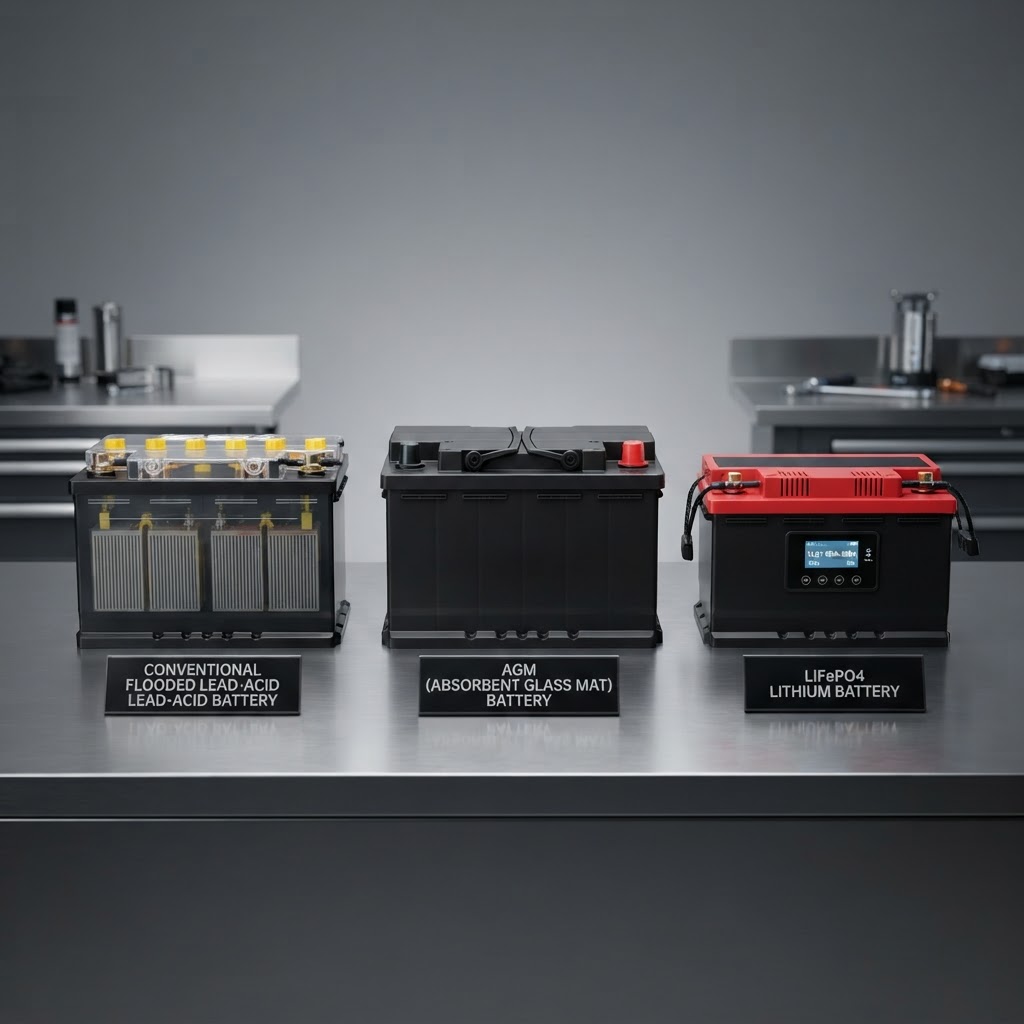
Depending on your vehicle, the correct replacement could be a conventional flooded battery, an AGM battery, or, on certain vehicles, a lithium-based battery such as LiFePO₄.
These battery technologies aren't automatically interchangeable. A battery may physically fit in the same location while still being the wrong technology for the vehicle's electrical and charging system.
So which one does your car actually need?
The answer depends on how your vehicle was designed, its factory battery specifications, electrical equipment, charging strategy, and, on some vehicles, battery-management requirements.
Here's what drivers should know before choosing a replacement.
What Is a Standard Car Battery?
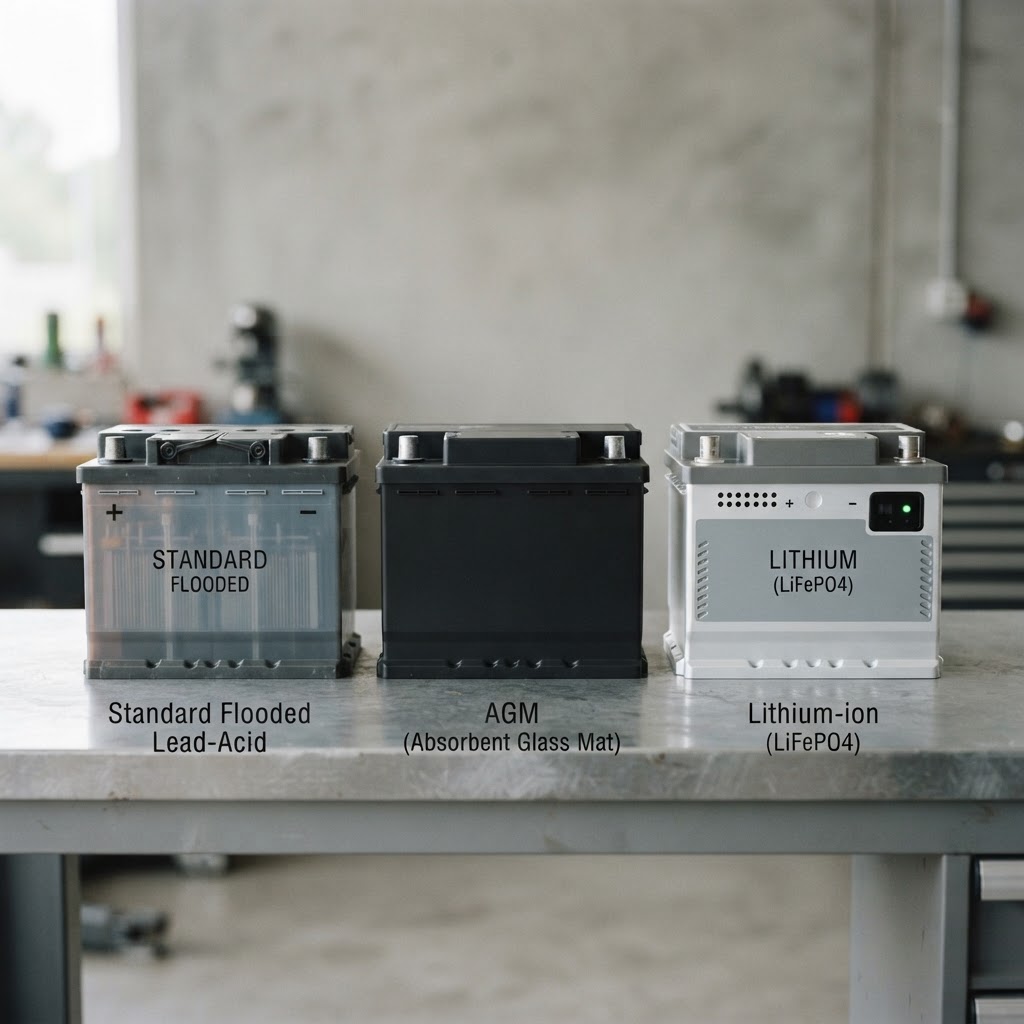
What many drivers call a "standard" car battery is a conventional flooded lead-acid battery.
This technology has been used in vehicles for decades and remains appropriate for many cars, trucks, and SUVs.
Inside the battery, lead plates are submerged in a liquid electrolyte solution. The battery supplies the power needed to start the engine and supports the vehicle's electrical systems when necessary.
Standard flooded batteries are generally less expensive than AGM or lithium alternatives, making them a practical choice when the vehicle is designed to use one.
But price shouldn't be the deciding factor.
If your vehicle requires AGM or another battery technology, installing a less expensive conventional battery simply because it fits isn't the same as installing the correct replacement.
A standard battery may be appropriate when:
- The manufacturer specifies a conventional flooded battery
- The vehicle doesn't require a different battery technology
- The battery meets the required group size and electrical specifications
- The replacement meets the vehicle manufacturer's requirements
The key is compatibility, not simply choosing the least expensive battery available.
What Is an AGM Battery?
AGM stands for Absorbent Glass Mat.
AGM batteries are still lead-acid batteries, but they're constructed differently from conventional flooded batteries. Instead of freely flowing liquid electrolyte, the electrolyte is absorbed into fiberglass mats positioned between the battery plates.
AGM technology is commonly found in modern vehicles with greater electrical demands and in many vehicles equipped with advanced energy-management or Start/Stop systems.
Depending on the vehicle, AGM batteries can provide advantages such as better cycling capability, strong starting performance, and improved support for demanding electrical systems.
But there's an important distinction:
AGM isn't automatically the correct battery simply because it's considered a more advanced technology.
The vehicle's actual requirements should determine the replacement.
Can I Replace an AGM Battery With a Standard Battery?
If your vehicle was designed to use an AGM battery, you generally shouldn't downgrade it to a conventional flooded battery simply because the cheaper battery physically fits.
The battery tray and terminal positions are only part of battery fitment.
A vehicle's charging strategy, electrical load, battery-management system, Start/Stop functionality, and other specifications can influence which battery technology it requires.
Installing the wrong technology could result in reduced battery life or poor performance and may interfere with systems designed around the specified battery.
That's why Mobile Battery Guys considers battery technology part of vehicle fitment rather than treating every battery of the same physical size as interchangeable.
Does a Start/Stop Vehicle Always Need an AGM Battery?
Not necessarily.
Start/Stop technology places additional demands on a battery because the engine may shut down and restart repeatedly during normal driving.
That's one reason AGM batteries are common in Start/Stop vehicles.
However, Start/Stop equipment alone shouldn't be used to determine the correct replacement battery.
Depending on the vehicle, manufacturers may specify AGM or another suitable battery technology.
The safest approach is to identify the battery specification for the specific year, make, model, engine, and configuration rather than assuming every Start/Stop vehicle uses the same type of battery.
What Is a Lithium Car Battery?
Lithium batteries represent another category of automotive 12-volt battery technology.
Certain modern, luxury, exotic, and performance vehicles can use lithium-based starter batteries from the factory. One chemistry you'll see in automotive applications is lithium iron phosphate, commonly abbreviated LiFePO₄.
Lithium batteries can offer substantial weight savings compared with traditional lead-acid batteries and have different operating characteristics.
But that doesn't make lithium a universal upgrade for every vehicle.
A vehicle designed around a conventional or AGM battery shouldn't automatically be converted to lithium, just as a vehicle designed around a particular lithium system shouldn't automatically receive an AGM battery simply because an AGM battery can be made to fit.
Vehicle-specific verification becomes particularly important when lithium is involved.
Can I Replace a Lithium Car Battery With an AGM Battery?
You shouldn't assume that you can.
This is one of the areas where looking only at battery dimensions or group size can create problems.
If a vehicle was engineered to use a particular lithium battery technology, its electrical system, charging strategy, battery monitoring, and related components may be designed around that battery.
An AGM battery may be physically similar enough to appear to be a replacement, but physical fitment alone doesn't establish compatibility.
Before replacing an original lithium battery with a different technology, the manufacturer's specifications and vehicle-specific requirements should be verified.
The same principle works in the opposite direction.
Lithium isn't automatically an upgrade for a vehicle that originally uses AGM or a conventional flooded battery.
Standard vs. AGM vs. Lithium: What's the Difference?
| Feature | Standard Flooded | AGM | Lithium / LiFePO\u2084 |
|---|---|---|---|
| Basic technology | Flooded lead-acid | Absorbent Glass Mat lead-acid | Lithium-based |
| Typical cost | Lower | Higher | Significantly higher |
| Weight | Heavier | Heavier | Generally much lighter |
| High electrical demand | Vehicle-dependent | Common application | Vehicle-dependent |
| Start/Stop applications | Vehicle-dependent | Common | Vehicle-dependent |
| Battery management considerations | Vehicle-dependent | Common on modern vehicles | Particularly important |
| Directly interchangeable | No | No | No |
| Registration/coding | Vehicle-dependent | Vehicle-dependent | Vehicle-dependent |
Standard Flooded
- Basic technology
- Flooded lead-acid
- Typical cost
- Lower
- Weight
- Heavier
- High electrical demand
- Vehicle-dependent
- Start/Stop applications
- Vehicle-dependent
- Battery management considerations
- Vehicle-dependent
- Directly interchangeable
- No
- Registration/coding
- Vehicle-dependent
AGM
- Basic technology
- Absorbent Glass Mat lead-acid
- Typical cost
- Higher
- Weight
- Heavier
- High electrical demand
- Common application
- Start/Stop applications
- Common
- Battery management considerations
- Common on modern vehicles
- Directly interchangeable
- No
- Registration/coding
- Vehicle-dependent
Lithium / LiFePO₄
- Basic technology
- Lithium-based
- Typical cost
- Significantly higher
- Weight
- Generally much lighter
- High electrical demand
- Vehicle-dependent
- Start/Stop applications
- Vehicle-dependent
- Battery management considerations
- Particularly important
- Directly interchangeable
- No
- Registration/coding
- Vehicle-dependent
This table is only a general comparison. It shouldn't be used by itself to determine which battery belongs in a particular vehicle.
Is AGM Better Than a Standard Battery?
This is where battery shopping can become misleading.
If you compare specifications and construction alone, AGM offers advantages over conventional flooded technology in many applications.
But that doesn't necessarily make AGM the "better" battery for your car.
If your vehicle was engineered for a conventional flooded battery and doesn't require AGM, a quality conventional battery that meets the correct specifications may be exactly what the vehicle needs.
Likewise, buying an expensive lithium battery doesn't automatically make your vehicle perform better if it wasn't designed for that battery technology.
The better question is:
Which battery technology is correct for my vehicle?
How Do I Know What Battery My Car Needs?
Determining the correct replacement can involve more than entering a year, make, and model.
Depending on the vehicle, relevant information can include:
- Year
- Make
- Model
- Trim
- Engine
- Original battery technology
- Battery group size
- Cold cranking amps (CCA)
- Amp-hour (Ah) rating
- Battery location
- Start/Stop equipment
- Vehicle options and electrical equipment
- Battery-management system requirements
- Registration or coding requirements
In some cases, two vehicles with the same model name and model year can have different battery requirements because of differences in engine, equipment, or configuration.
This is why accurate vehicle-specific battery research matters.
Does the Battery Group Size Tell Me What Battery I Need?
Not by itself.
Battery group size generally helps describe physical characteristics such as dimensions and terminal configuration.
That's important because the battery needs to fit and connect properly.
But two batteries with compatible dimensions can use different technologies or have different electrical specifications.
For example, seeing that an AGM battery and a flooded battery share a compatible physical size doesn't automatically mean they're interchangeable in a particular vehicle.
Physical fit is only one part of correct battery fitment.
What About CCA?
CCA stands for cold cranking amps.
It's a measure related to a battery's ability to provide starting current under cold conditions.
CCA is an important specification, particularly in colder climates, but it shouldn't be considered independently from the rest of the vehicle's battery requirements.
Choosing the right battery means considering the complete specification, including technology, capacity, physical fitment, and vehicle requirements.
Simply buying the battery with the largest CCA number isn't necessarily the right approach.
Does a New AGM or Lithium Battery Need to Be Registered?
Sometimes.
Battery registration requirements depend on the vehicle rather than simply whether the battery is AGM or lithium.
Some modern vehicles use battery-management systems that monitor battery condition, age, charging behavior, and energy usage.
After replacement, certain vehicles need to be informed that a new battery has been installed. Other vehicles may require additional coding when battery specifications or technology change.
And many vehicles require neither.
For a deeper look at how this works, see Does a New Car Battery Need to Be Registered After Replacement?.
Why Installing the Correct Battery Technology Matters
The goal of battery replacement isn't simply to make the vehicle start today.
The replacement should also be appropriate for how the vehicle was designed to operate.
Using the correct battery helps ensure the vehicle's starting, charging, and electrical systems are working with the type of battery they were designed to support.
That's especially important as vehicle electrical systems become more sophisticated.
What used to be a relatively simple parts decision can now require checking several vehicle-specific factors before installation.
Can Mobile Battery Guys Determine Which Battery My Vehicle Needs?
Yes.
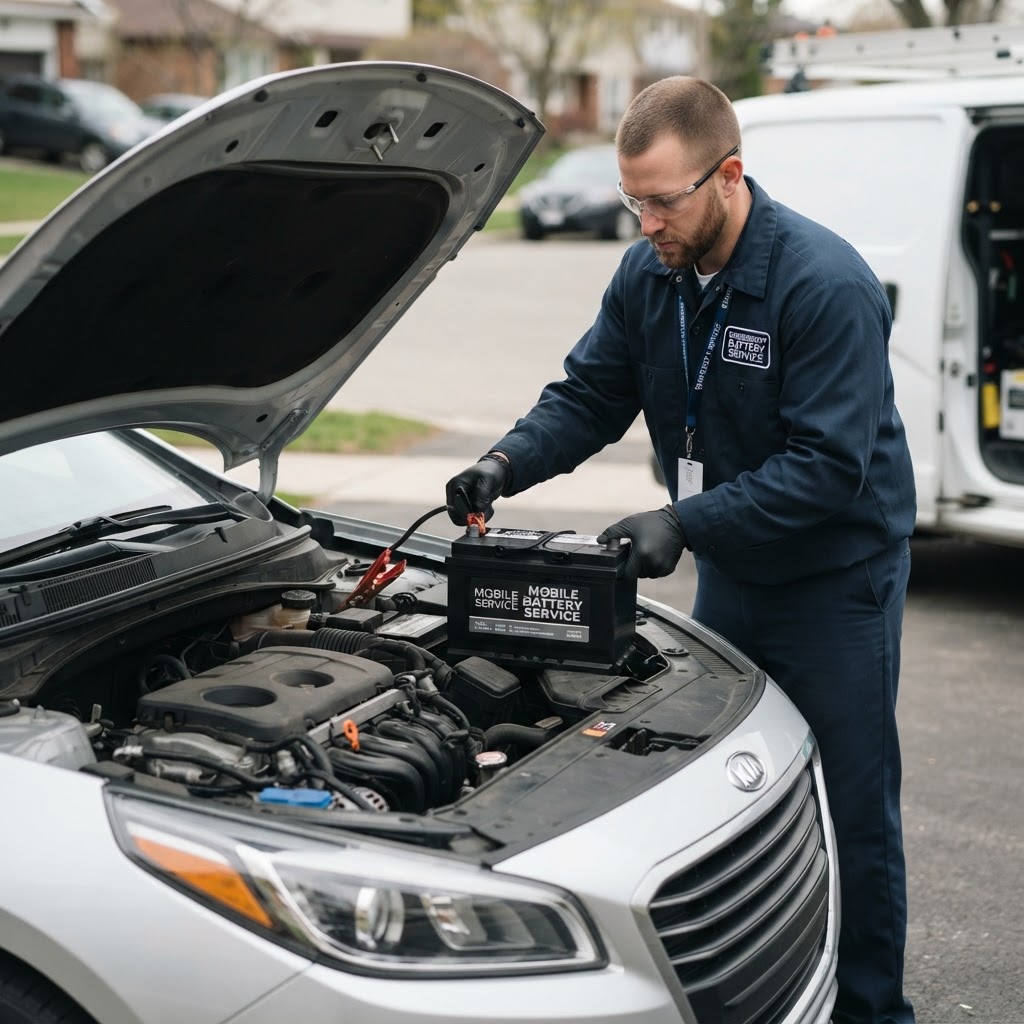
When you request mobile battery replacement, determining the appropriate battery for the vehicle is part of the process.
Mobile Battery Guys uses vehicle information and available fitment data to identify the appropriate battery technology and specifications before installation.
For vehicles where battery requirements aren't sufficiently clear, additional verification may be necessary rather than simply assuming a battery is compatible.
Once the appropriate battery is determined, the technician can bring the replacement directly to your location and perform the installation.
To learn more about how the on-site process works, see Mobile Car Battery Replacement Near You: How On-Site Service Works.
Mobile Battery Replacement in New Jersey, New York City, and Atlanta
Mobile Battery Guys provides on-site battery replacement across New Jersey, New York City, and Metro Atlanta.
Whether your vehicle requires a conventional battery, AGM battery, or a specialized battery that requires additional verification, choosing the correct replacement starts with identifying what the vehicle actually calls for.
- Mobile Battery Replacement in New Jersey
- Mobile Battery Replacement in New York City
- Mobile Battery Replacement in Metro Atlanta
Not Sure Which Battery Your Vehicle Needs?
You don't need to guess between Standard, AGM, or lithium.
Enter your vehicle information when booking with Mobile Battery Guys so the appropriate battery options can be determined for your vehicle.
From battery selection and delivery to professional installation and battery registration when required, the service comes directly to you.