
The Honest Answer
For some cars, yes, replacing the battery yourself is straightforward. For many modern vehicles, particularly anything built in the last decade with advanced electronics, it's more involved than people expect.
Let's break down what actually affects whether DIY makes sense for your specific situation.
When DIY Is Reasonable
Replacing a battery yourself is manageable if all of the following are true.
Your car is a 2010 or older domestic or Japanese vehicle. Older cars without complex electronics management systems are much more forgiving about battery swaps. The battery is usually easy to access, and there's no coding required.
The battery is in a straightforward location. Most traditional battery installations are in the engine bay, clearly visible and accessible with basic tools. If you can see it, reach it, and remove it without removing other components, you're in decent shape.
Your car does not require battery coding. This is the big one. More on this in a moment.
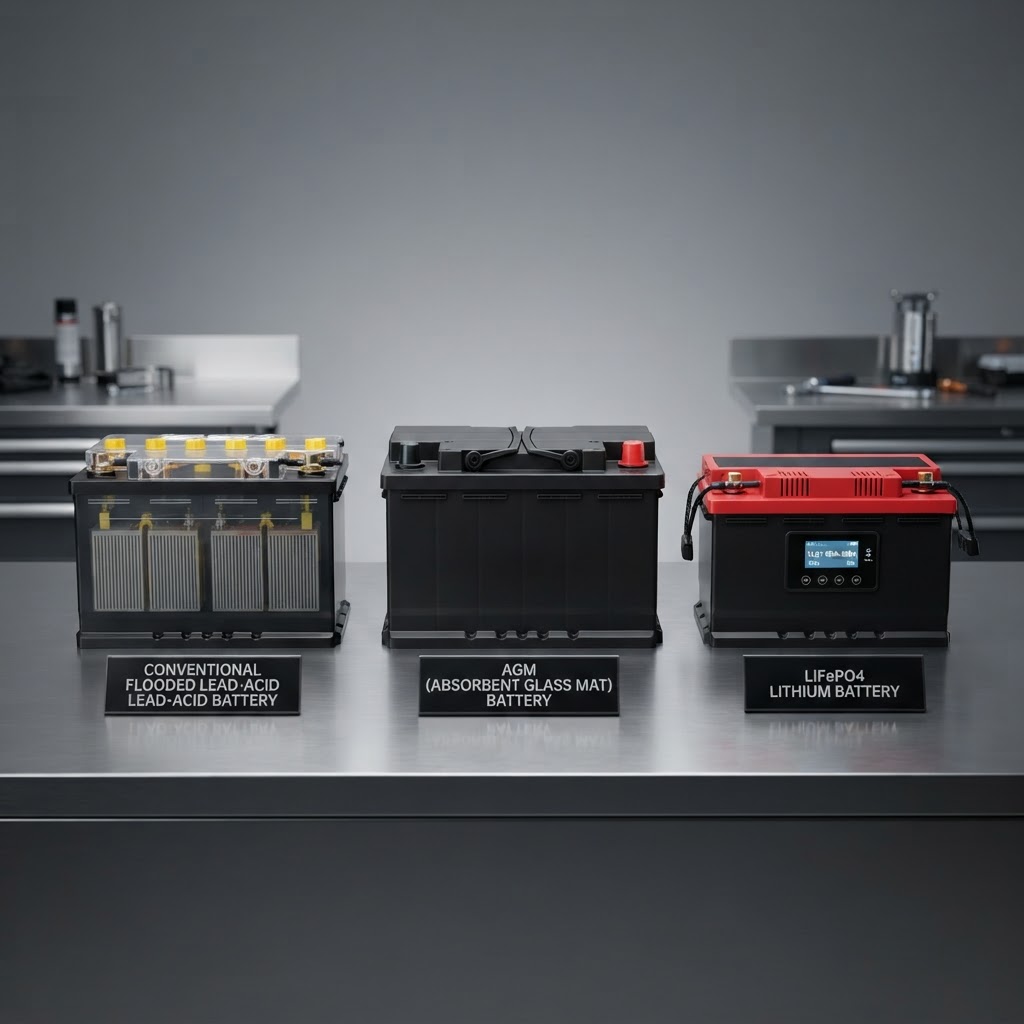
You have the right battery. Not just the right size, but the right type. If your car came with an AGM battery, you need to replace it with an AGM battery. This is not negotiable.
What You Need for a Basic Battery Swap
For a simple, older vehicle, the tools and process are minimal.
- A wrench (usually 10mm)
- Safety glasses and gloves
- The correct replacement battery
- Optional: a battery memory saver to maintain computer settings during the swap
The process: disconnect the negative terminal first, then positive. Remove the hold-down bracket. Lift out the old battery, drop in the new one, reconnect positive first then negative.
For basic vehicles, that's genuinely all there is to it.
Need a battery now?
We can be there in 60 to 90 minutes. Licensed, insured, upfront pricing.
Where It Gets Complicated
Battery Coding
This is where most DIY projects run into trouble.
BMW, Mercedes-Benz, Audi, Volkswagen, Porsche, Volvo, Jaguar, Land Rover, and many other modern vehicles require a process called battery coding or ECU registration after any battery replacement.
The car's battery management system tracks the health and age of the battery to optimize the charging profile. When you install a new battery, the system needs to be told that the old battery is gone and a new one is in. If you skip this step, the system continues charging based on the old battery's profile, which means your new battery gets improperly charged, leading to premature failure and potential electrical issues.
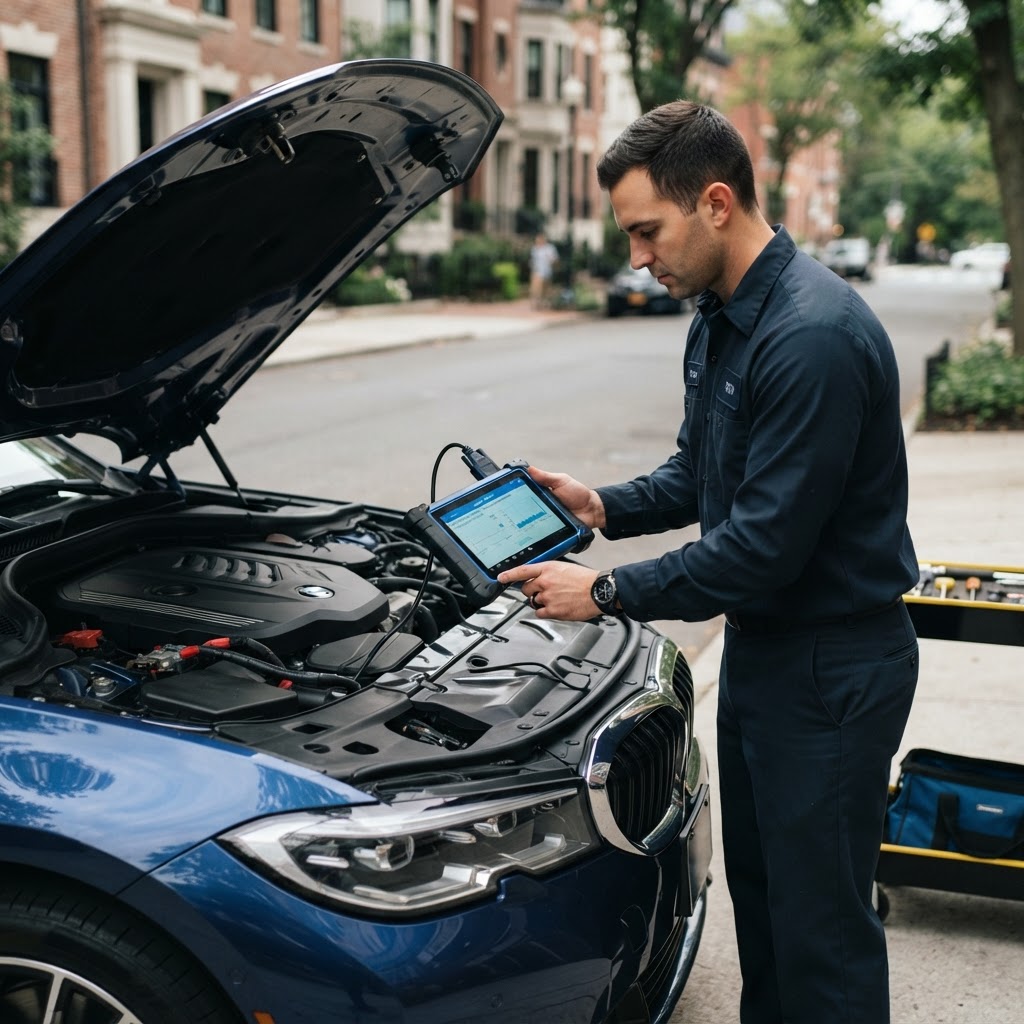
You cannot do battery coding without a diagnostic tool that connects to the car's OBD-II port and communicates with the battery management system. A basic code reader won't do it. You need software specific to your vehicle brand.
This is the single biggest reason a professional makes sense for modern European and luxury vehicles.
Battery Location
Not all batteries are in the engine bay under the hood. Some common alternative locations:
- Under the rear seat (BMW, some Chrysler vehicles)
- In the trunk (Cadillac, Audi, Porsche)
- In the wheel well
- Behind a panel that requires partial disassembly
A battery you can't easily access isn't a 10-minute job anymore.
Battery Memory and Computer Resets
Even on vehicles that don't require coding, disconnecting the battery resets certain learned settings in the car's computers. Window positions, throttle body calibration, transmission shift points, and idle quality can all behave differently after a battery swap until the car re-learns its parameters.
Some of these recalibrations happen automatically after a few drive cycles. Others require a specific procedure or a diagnostic tool to reinitialize.
DIY vs. Mobile Service: The Real Cost Comparison
If you factor in your time, the cost of the correct battery at retail price, and the risk of skipping coding on a car that needs it, the cost difference between DIY and a mobile service is often smaller than it seems.
A mobile service brings the right battery, handles the installation properly, does the coding if required, and disposes of the old battery. For most NYC and NJ drivers, particularly those with modern or European vehicles, the professional route is the practical one.
For an older, simple vehicle where you're confident about the process and have the tools, DIY is a perfectly reasonable choice.
Need a battery now?
We can be there in 60 to 90 minutes. Licensed, insured, upfront pricing.
Key Takeaways
- 1DIY battery replacement is reasonable for older vehicles without coding requirements and batteries in accessible locations.
- 2Battery coding is required for most European and luxury vehicles and cannot be done without specialized diagnostic equipment.
- 3Always replace an AGM battery with another AGM battery. Using a standard battery as a replacement causes premature failure.
- 4Some batteries are located under the rear seat, in the trunk, or behind panels, making DIY more complex.
- 5Disconnecting the battery can reset computer settings and require drive cycles or professional recalibration.
- 6When you factor in battery cost, tools, time, and coding risk, mobile service is often the practical choice for modern vehicles.